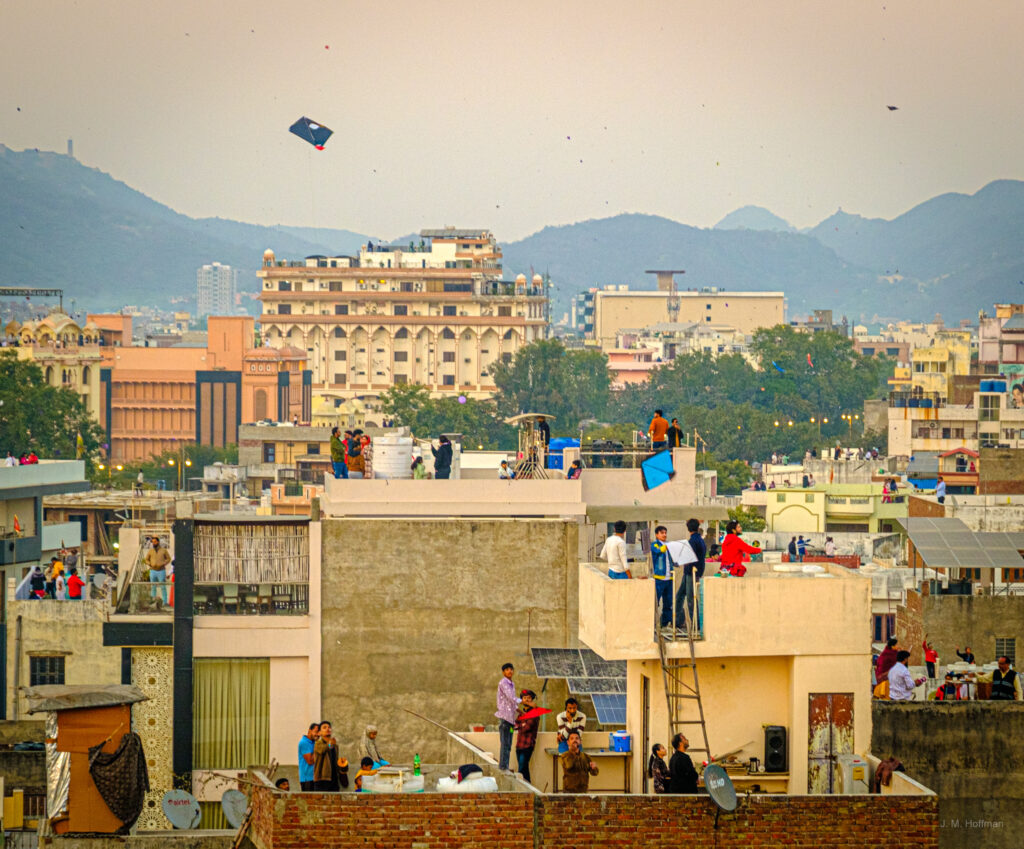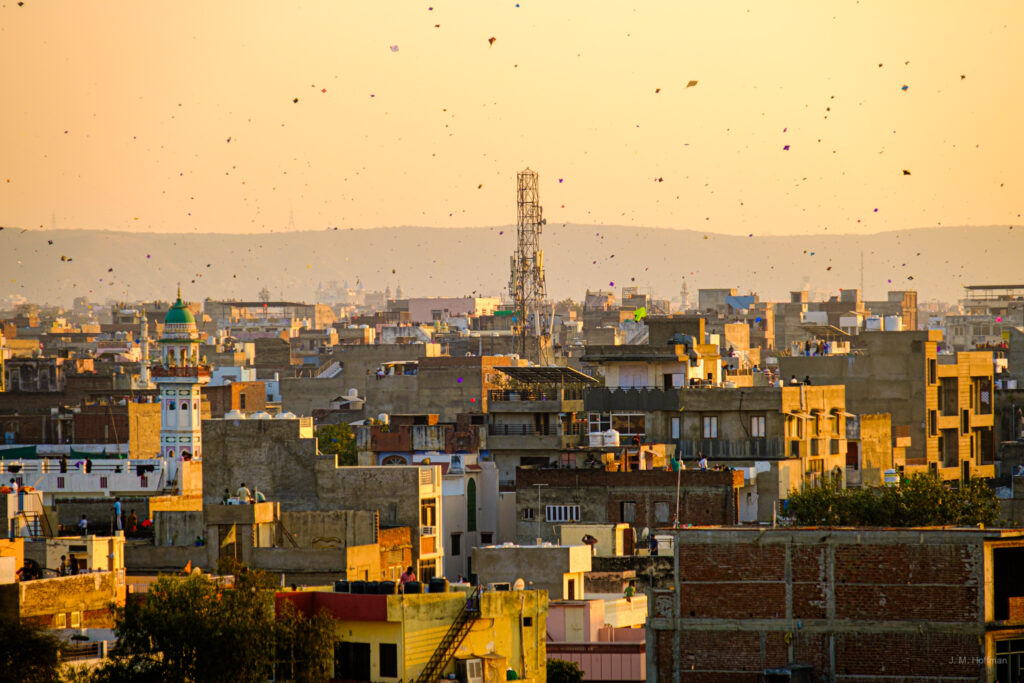
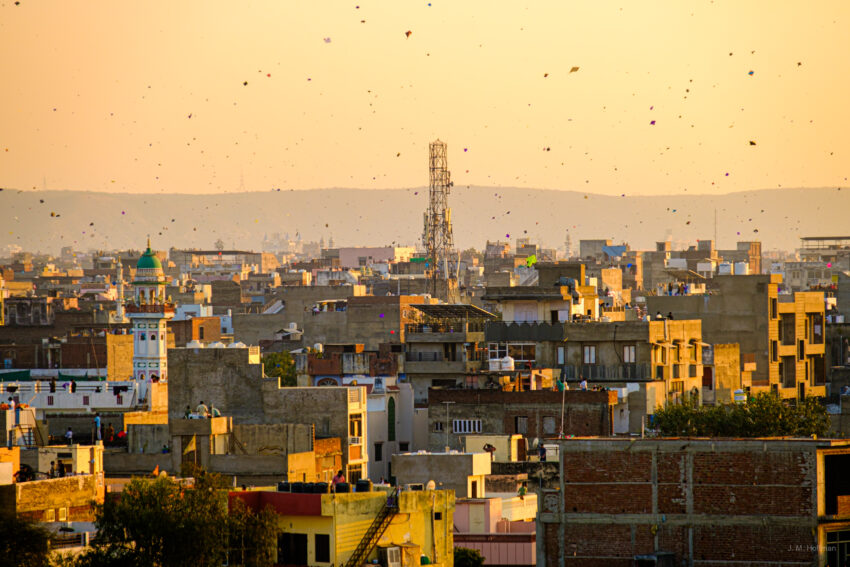
Each January, as the winter sun shifts almost imperceptibly northward, the pink desert city of Jaipur turns its face to the sky. This is Makar Sankranti, the kite festival, celebrating the sun’s entry into Capricorn and the loosening of winter’s grip. Rooftops become gathering places and the air fills with color and rivalry. From the old city’s rose-washed walls to its modern outskirts, families climb narrow staircases carrying reels of string and paper kites, staking quiet claims to the open air above them. By sunset, the saffron sky is tessellated. Thousands of small, trembling diamonds hover over domes and palaces, each one a fragile contribution to a collective jubilation unfolding below.
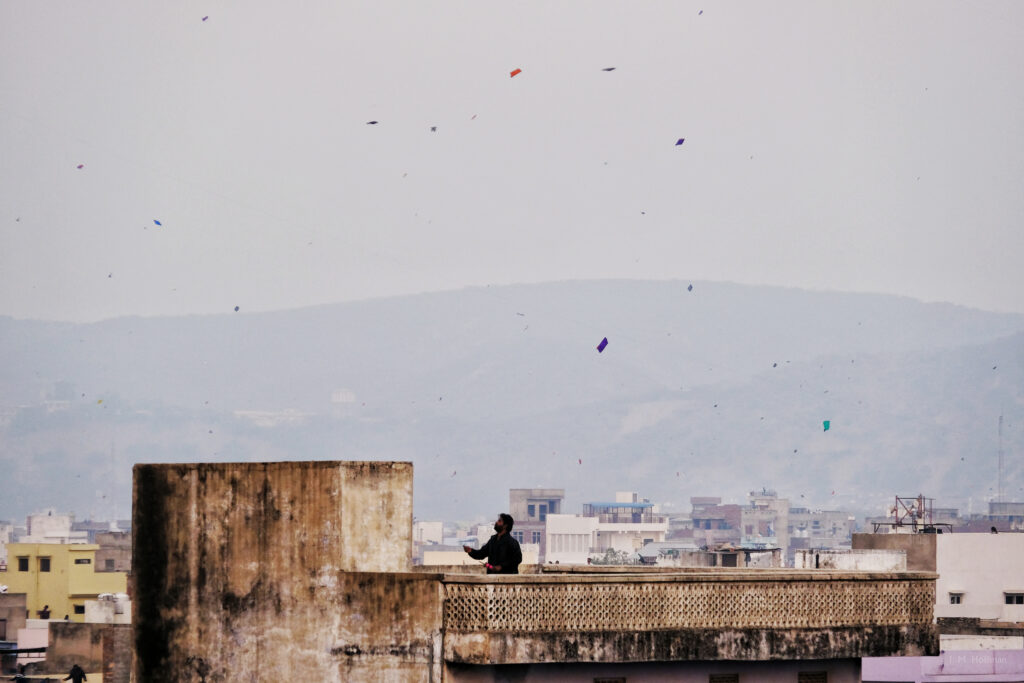
In antiquity, Makar Sankranti arrived with the winter solstice itself, the shortest day of the year and the sun’s turning point northward. But back then its date was fixed to the zodiac’s Capricorn rather than directly to the solstice. (Technically, the holiday’s calculus relies on the sidereal zodiac as opposed to the tropical zodiac.) And the (sidereal) zodiac in turn was fixed to the distant stars. As those stars wandered the nighttime sky — or as we now say, as they held their places while the Earth’s axis slowly wobbled — the seasonal year slipped out of alignment with that older celestial grid. The solstice crept westward along the sun’s path, leaving the constellation of Capricorn behind. Today, the two are separated by more than three weeks: the solstice falls in December, while Makar Sankranti arrives in mid-January, when the sun reaches the same stellar longitude that it did in antiquity.
In this sense, the kites over Jaipur — the modern-day capital of the ancient Land of Kings — rise both to honor a new spring and to commemorate age-old traditions.