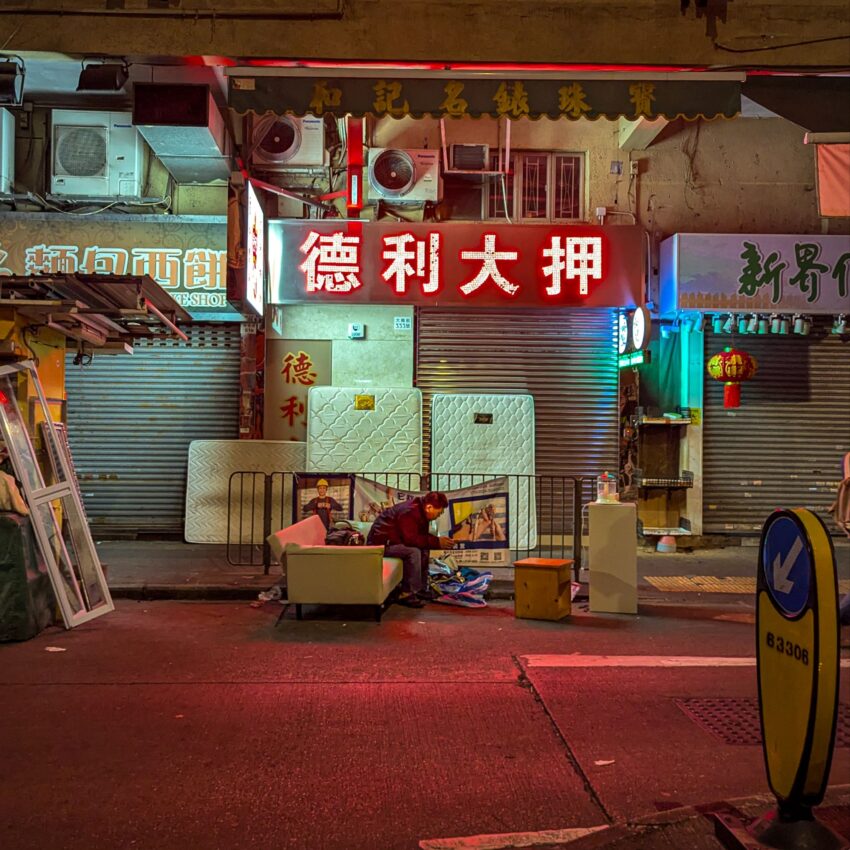
It was my dinner companion, not me, who wanted this photograph. At the time I didn’t appreciate her keen eye, nor the uncanny depth of this street scene in Hong Kong’s Sham Shui Po (“Deep-Water Pier”) district. And for sure I didn’t know that less than a mile away from this weary, anonymous man, a tomb had been prepared for another local nearly 2,000 years earlier.
We know as little about that ancient person as I do about the man in my photo. He, or she, was to be buried in a brick tomb toward the end of the Han dynasty, accompanied not merely by the trappings of death but by the necessities of life. There were vessels for cooking and eating; there were bowls and a mirror and a basin and a bell, all of bronze; and there were miniature pottery versions of a house, a granary, a well, and a stove. The items were, it would seem, meant to “serve the dead as you serve the living” (事死如事生), a duty recorded in the ancient Confucian text The Zhongyong.
Inscribed on some of the tomb’s bricks is a hope for “Great Fortune to Panyu” (大吉番禺) or “Panyu’s Great Stability” (番禺大治曆) — Panyu being the Han-era port and commercial center on the Pearl River estuary, and the ancient administrative seat of the county that included what is now Hong Kong. Panyu was important enough in antiquity that Sima Qian’s Records of the Grand Historian in the 1st century BCE had already counted it among China’s great trading cities. And the Pearl River Delta would eventually be home to modern Guangzhou and Shenzhen, perhaps the world’s leading centers of manufacturing and innovation.
The tomb lay buried and unknown from about the 2nd century CE until the middle of the 20th century, when in 1955 workers preparing a hillside for new housing stumbled across it. They were building resettlement apartments during the extraordinary refugee influx and squatter crisis created as people fled war and revolution in China to make new lives in Hong Kong. Two years earlier on Christmas Day, a fire in nearby Shek Kip Mei had left more than 50,000 people homeless, accelerating a resettlement program that would grow into Hong Kong’s vast system of public housing. Did anyone stop to observe the irony? It was workers building homes for newly displaced people who uncovered a house, granary, well, and stove stashed for someone long dead.
The newcomers from China needed work as well as homes, and many found it in Sham Shui Po. Hong Kong was becoming one of the world’s great manufacturing centers, producing textiles and clothing, toys and plastics, watches and electronics, much of it in factories and workshops crowded into neighborhoods like this one. Those factories, in turn, needed all manner of materials and tools. So suppliers gathered nearby. Soon whole streets acquired specialties, many of which survive to this day.
The Sham Shui Po of today is crowded and noisy, inexpensive, and intensely practical, with bargain electronics, repair shops, pawnshops, food stalls, and handcarts competing for space in streets where commerce still unfolds largely in public. Locals shop for dinner at Pei Ho Street Market. Tinkerers, collectors, and tourists rummage through the electronics and second-hand goods on Apliu Street. Parents and children crowd Fuk Wing Street’s “Toy Street.” And gamers and computer geeks disappear into the warrens of Golden Computer Centre in search of obscure parts. Oddly, here we find yesterday’s future — computers and electronics — already recast as old and second-hand.
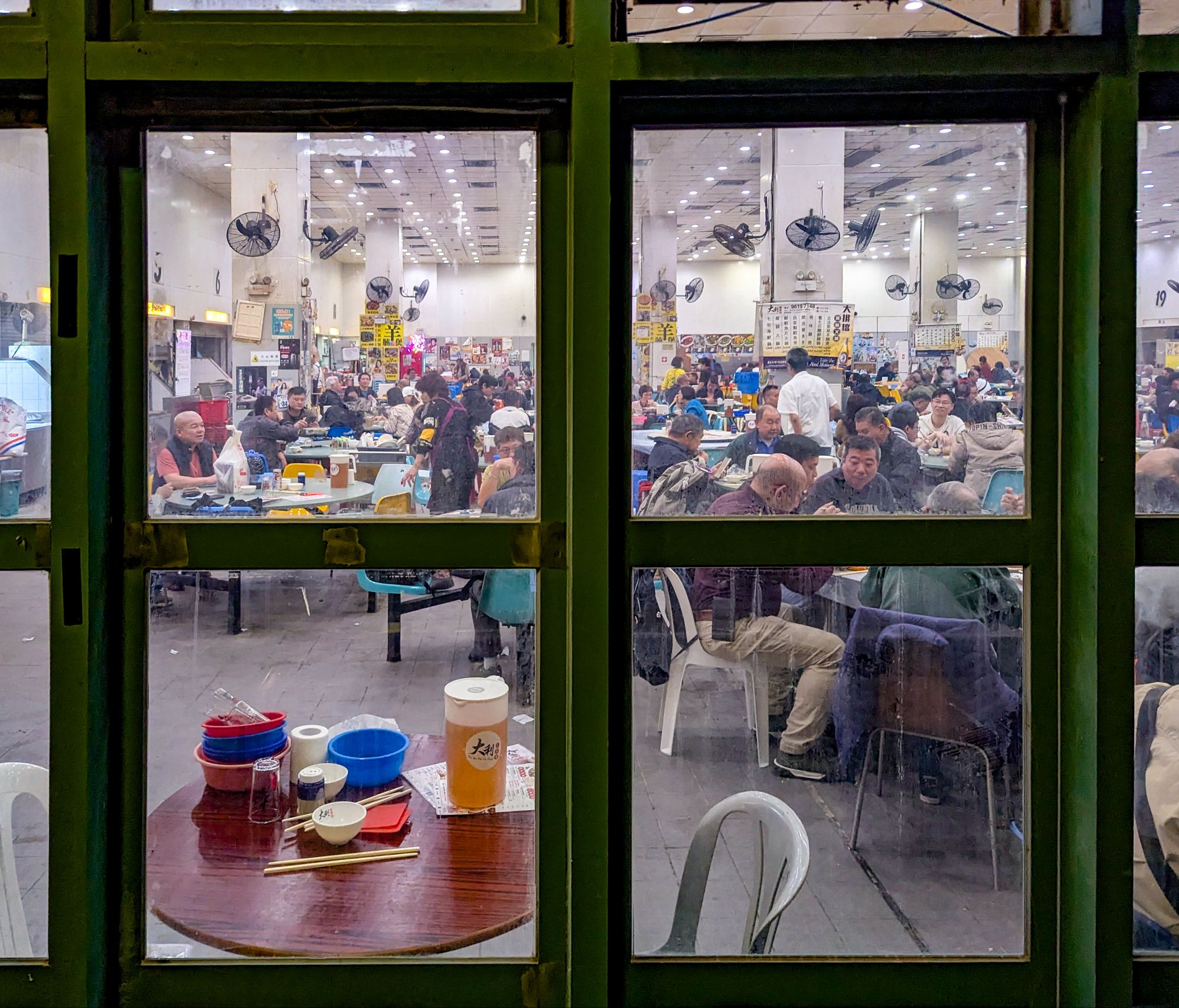
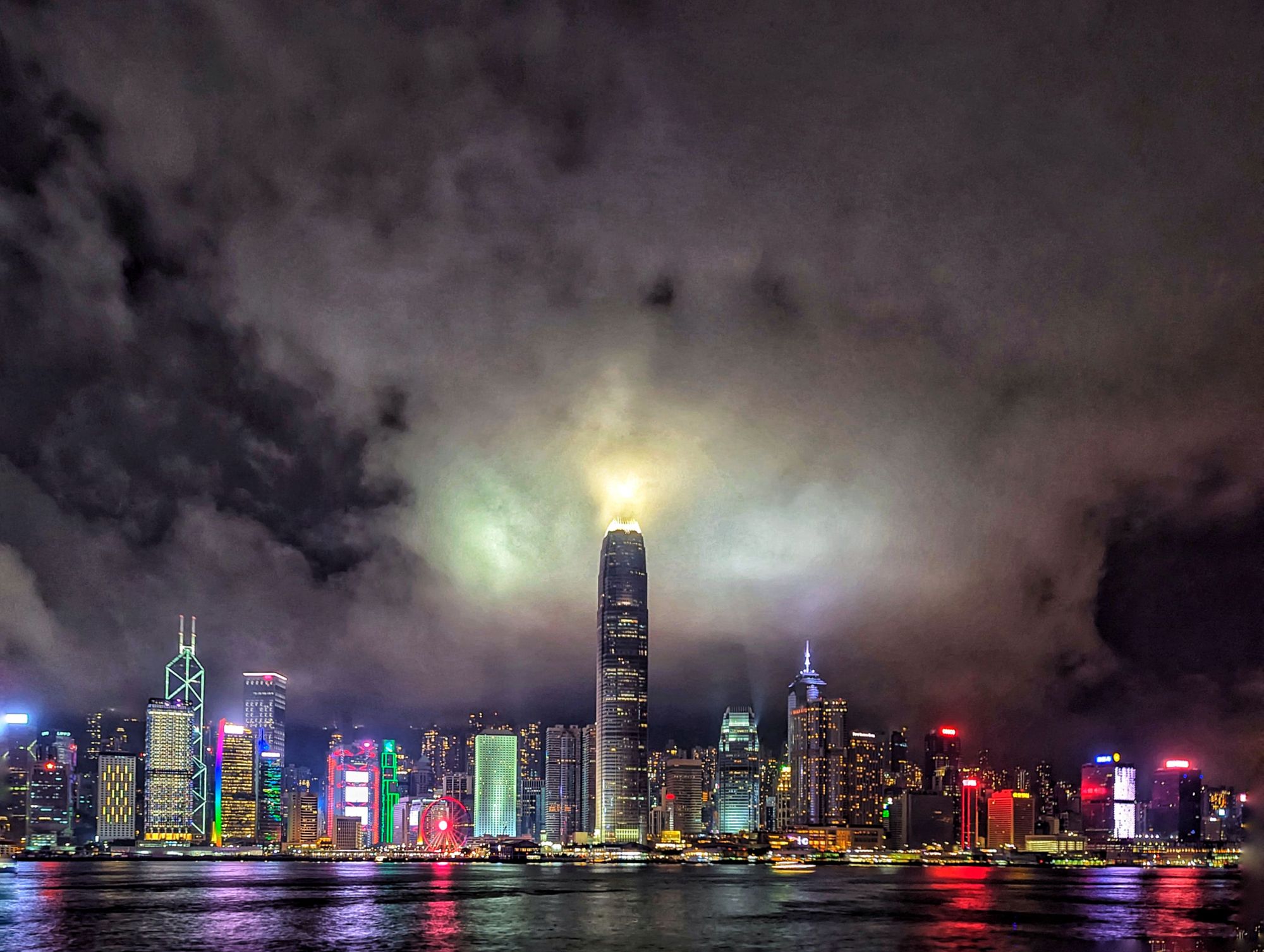
In this sense Sham Shui Po mirrors Hong Kong as a whole, because Hong Kong is shiny, towering, bustling, and innovative, but more than anything else forward-looking. As it happens, Sham Shui Po sits just north of “Boundary Street,” the dividing line between the two original British acquisitions in 1842 (Hong Kong Island) and 1860 (the southern part of Kowloon), and the last one in 1898 (northern Kowloon and the “New Territories”). Sham Shui Po straddles two worlds: the legacy of Panyu and glitzy Hong Kong Island.
Shockingly, the museum eventually built to preserve the tomb was the very first government museum in Hong Kong. And the museum was only built in response to intense pressure from groups like the Hong Kong Chinese Reform Association and the Hong Kong Civic Association. The government had originally planned to demolish the only Han-era brick tomb in Hong Kong. And the attitude toward the tomb was hardly an isolated case. Hong Kong’s zeal for the future is mirrored by apparent disregard for the past. Even the Deep-Water Pier for which Sham Shui Po is named has disappeared, replaced by land reclamation to make more room for modernity.
And what about the modern anonymous man in the photo I almost didn’t take, sitting — like the ancient tomb’s anonymous subject — among the mundane objects of day-to-day life: sofas and mattresses for people, tables for things. Fittingly, the neon sign over his head proclaims “Tak Lee Pawn Shop” — a business devoted to the ebb and flow of human artifacts. Zoom out a little and Tak Lee’s Pawn Shop reflects the ebb and flow of human lives.
Heir to ancient Panyu’s greatness, modern Hong Kong has reclaimed the sea and filled the sky with towers, built tunnels for subways and runways for airports, each decade plastering over the old with the new, then the new with the newer. Yet for all that, here sits a man amid the day-to-day, with mattresses and tables, less than a mile from a tomb prepared nearly 2,000 years ago with a house, a stove, bowls, and a well.
Looking back to my stroll through Sham Shui Po, I wonder whether I was like the Hong Kong government of the 1950s, too eager to pass this scene by, and whether my dinner companion was the hero of the story, urging me to construct a museum.