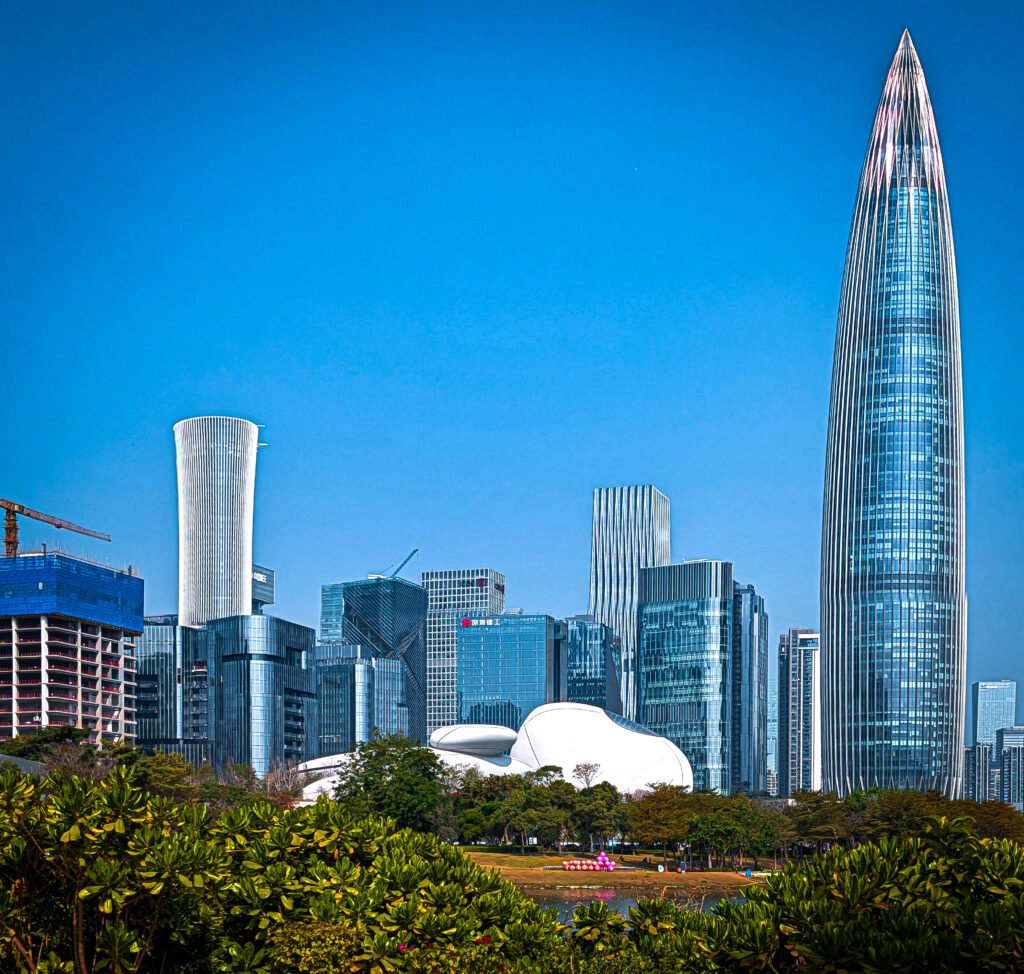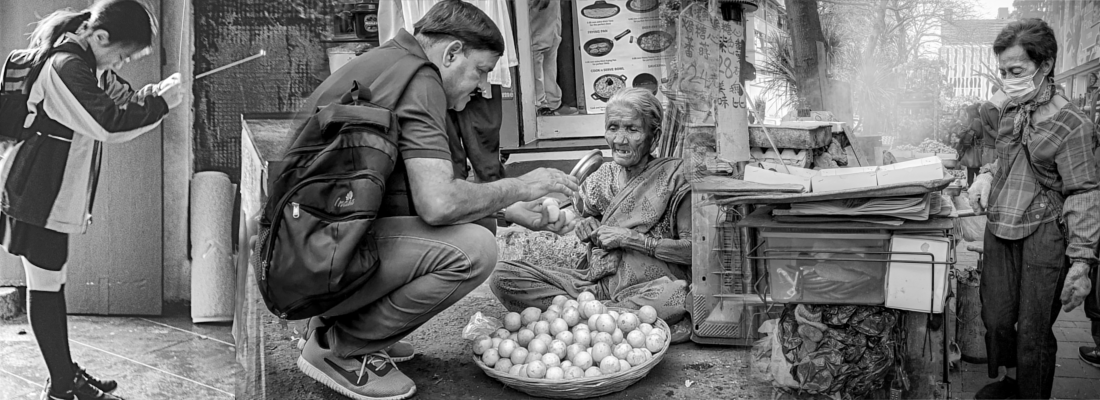
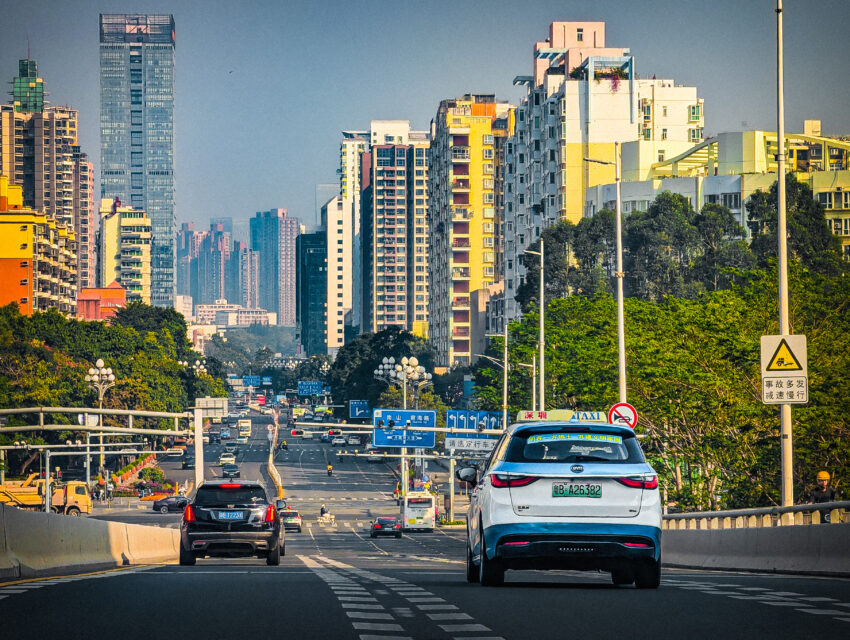
Shenzhen is the invisible megacity: a Chinese metropolis of some 18 million people that few in the West have even heard of.
For most of its history, the area was part of Bao’an County, a scattering of fishing villages and rice paddies along the Pearl River Delta. In 1979 the county seat was renamed Shenzhen. A year later Beijing designated it one of China’s first Special Economic Zones — a place where market experiments could unfold at the edge of a still-communist economy.
What followed was one of the fastest urban transformations in human history. In little more than a generation, factories, highways, and glass towers replaced irrigation ditches and farmland. Millions of migrants from across China poured in to form a workforce. By the early 2000s Shenzhen had already surpassed New York City in population; today it dwarfs it.
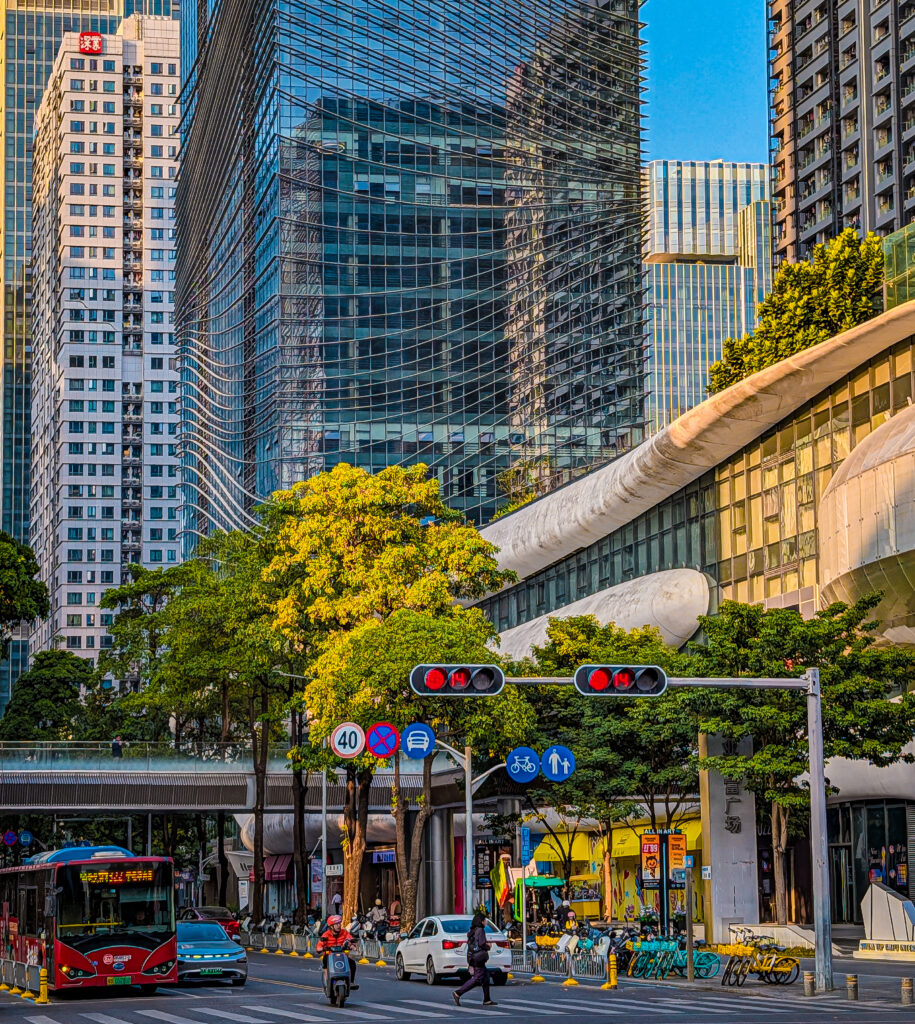
The city remains startlingly young. Nearly two-thirds of the residents are under 40, and fully a quarter still in their twenties — roughly double the share found in London or New York City. One person in six was born before the city even existed. Less than one in twenty is over 65.
This young population produces nearly half a trillion US dollars in economic output each year, creating an economy to rival entire countries like Austria or Norway. The Port of Shenzhen ranks among the world’s busiest container hubs, moving tens of millions of shipping containers annually — more cargo than all the ports on the U.S. West Coast combined. And Shenzhen’s airport, despite competing with the main air hub in nearby Guangzhou, handles more passengers and more cargo than New York’s JFK.
The city files more international patents each year than any other city on Earth and serves as headquarters for technology giants such as Huawei (creator of the world’s highest-ranked phone cameras), Tencent (the world’s largest video game company by revenue, and developer of WeChat, the super-app used by more than a billion people), DJI (producer of the majority of the world’s consumer drones), and BYD (the world’s largest manufacturer of electric buses — used in some 300 cities on all six inhabitable continents, including, of course, Shenzhen itself). By some estimates, 90 percent of the world’s consumer electronics pass through the Pearl River Delta supply chain, much of it coordinated from Shenzhen, and there is hardly a spot on Earth that is not automated, powered, or connected by technology from Shenzhen.
And yet, there’s surprisingly little to see.
On a previous visit, I happened upon the OCT-LOFT Creative Culture Park, which was converted from an old electronics-factory compound into a pedestrian-friendly cultural district with galleries, cafes, bookstores, and design shops. While pleasant enough, it was hardly worth a special trip.
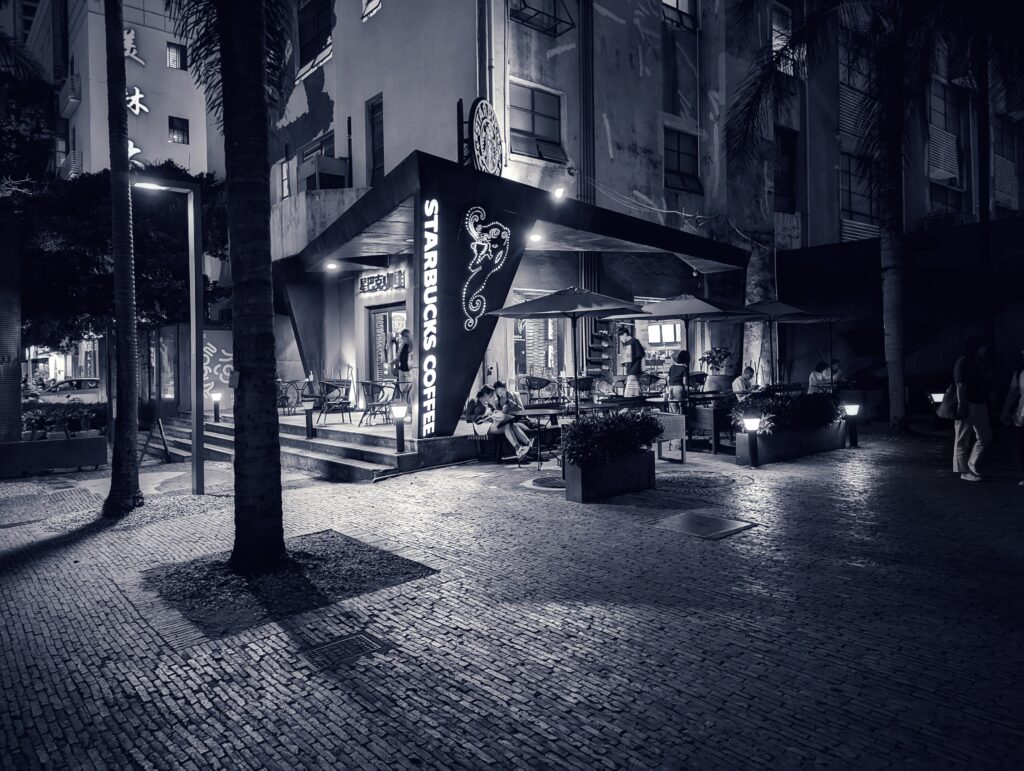
This time we started the day with Nantou Ancient City — the historic walled administrative center of the region for nearly 1,700 years — but even that had transformed itself into almost a parody of the modern coffee scene, akin to a Brooklyn arts district, or a Berlin courtyard cafe quarter, airdropped into China and painted over with hyper-modernity.
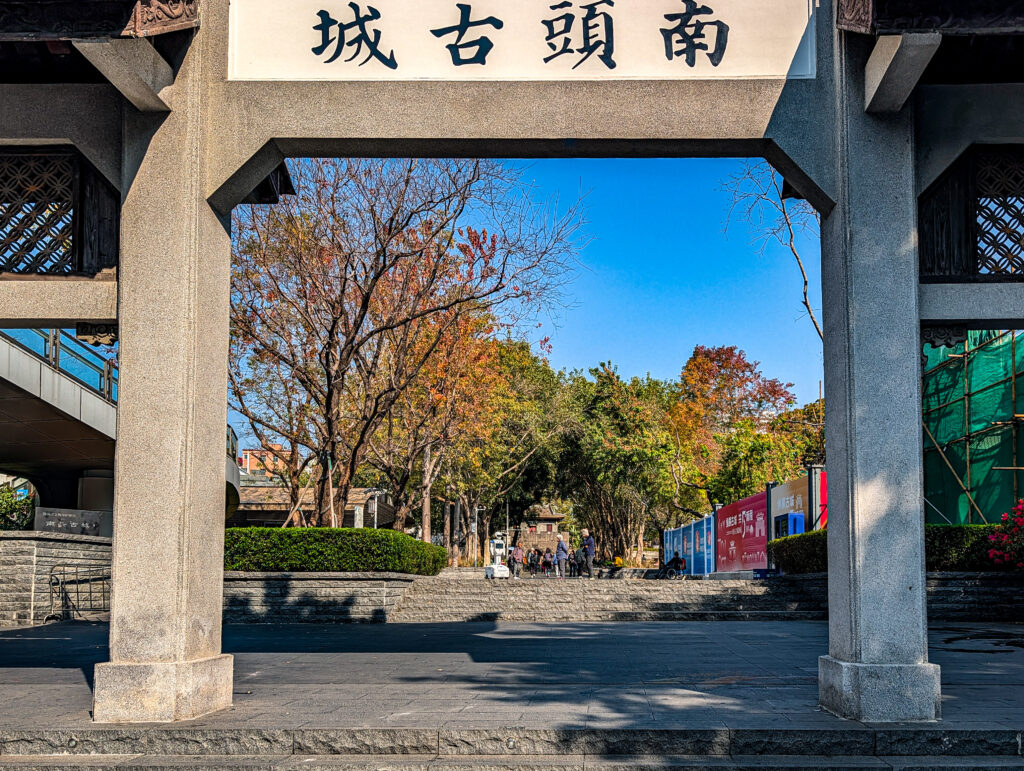
We also saw glorious and practically empty parks tucked improbably beneath an ever-increasing number of modern skyscrapers.
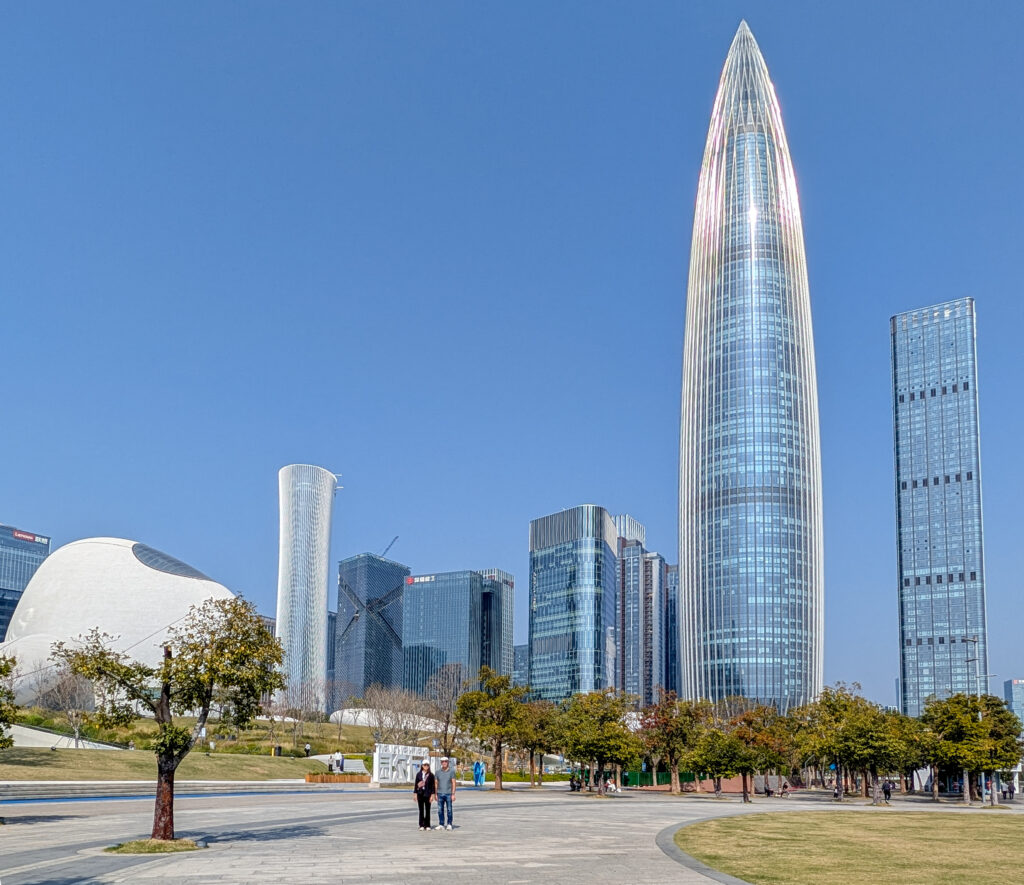
Like many Chinese cities, Shenzhen has fantastic shopping, with a plethora of sprawling, multi-story indoor “wholesale” markets that are, despite their name, open to the public. Each one specializes in a narrow realm such as home furnishings or handbags, and offers shockingly low prices even by Asian standards.
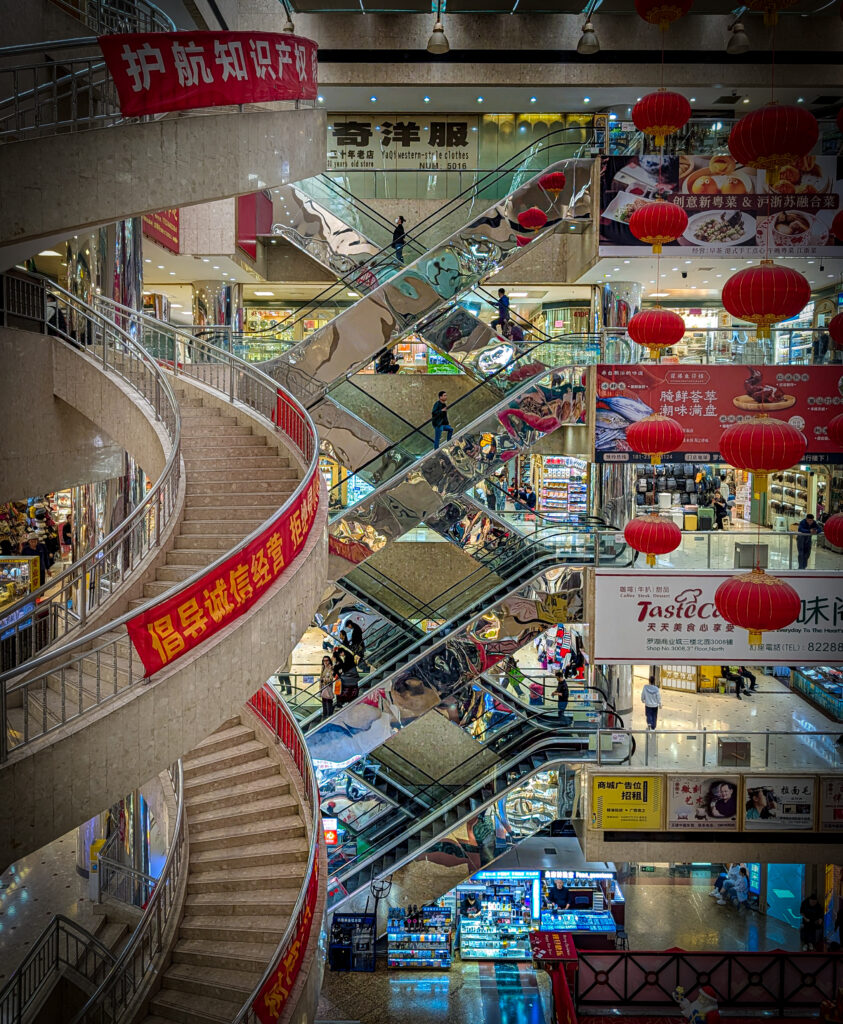
The city is primarily functional. Although it has its curiosity value, it’s more of a workhorse than a museum, less a destination than a conduit to the world.
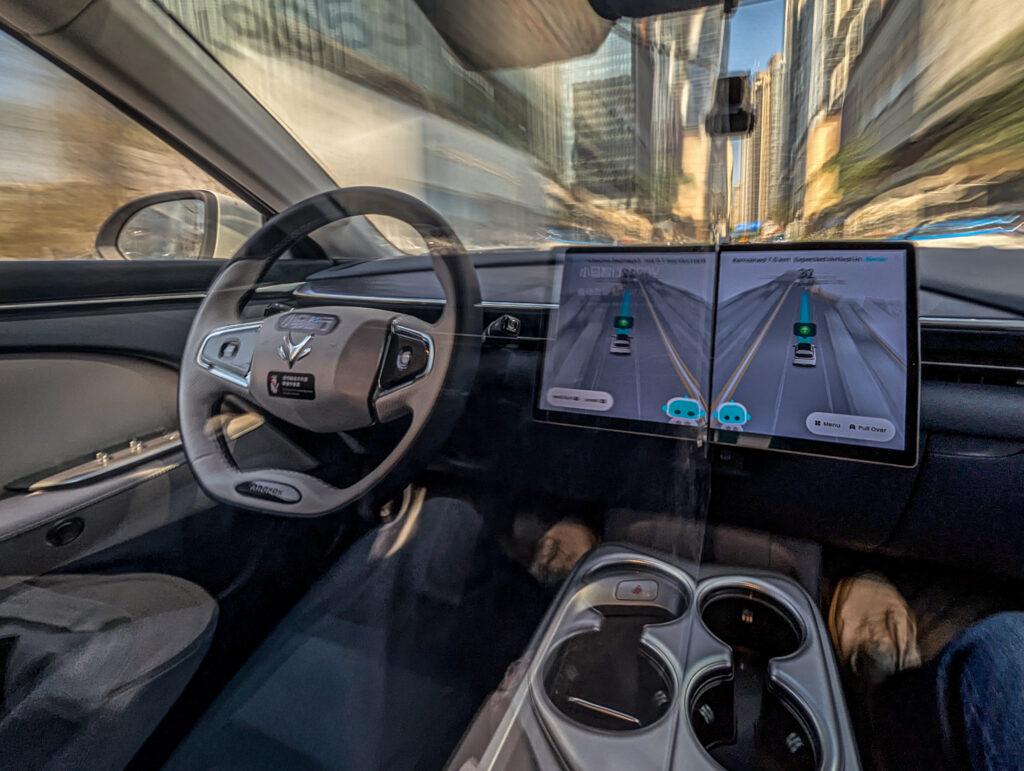
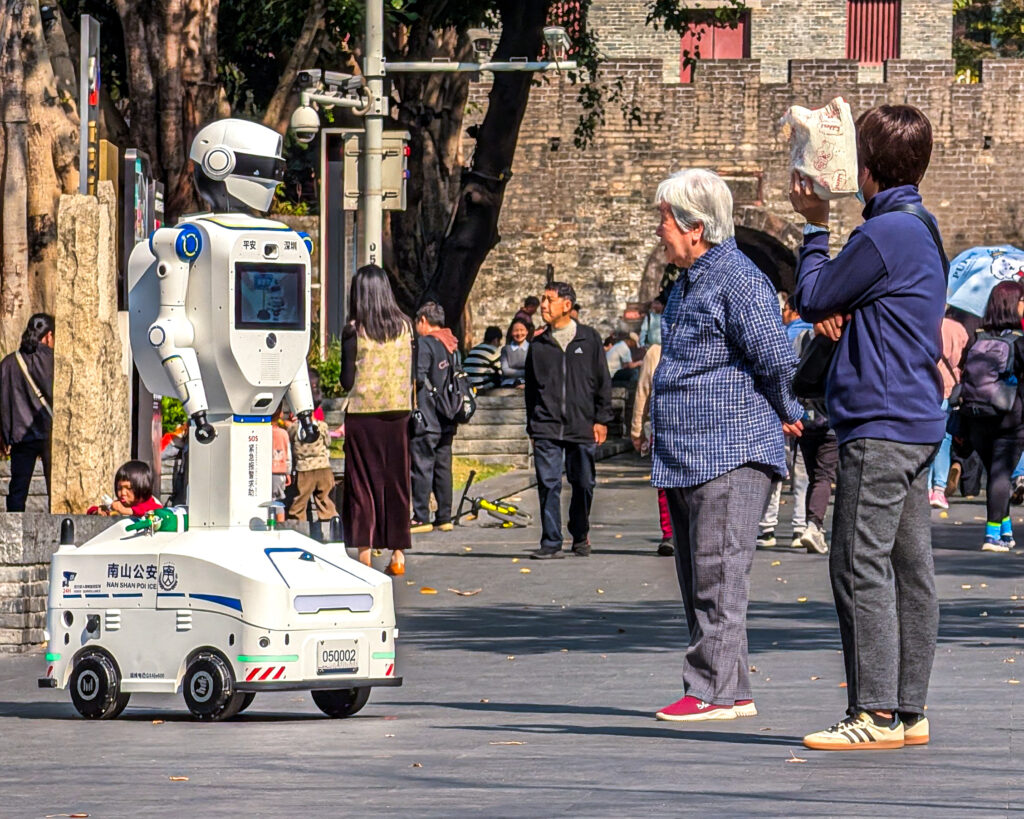
But it claims to be a window on the future, and in some respects delivers on the promise. We hailed a self-driving taxi, for example. Drones deliver drinks in parks. All of the buses are electric. And behind the nondescript walls of nondescript buildings, I suspect, the 22nd century is already being designed.